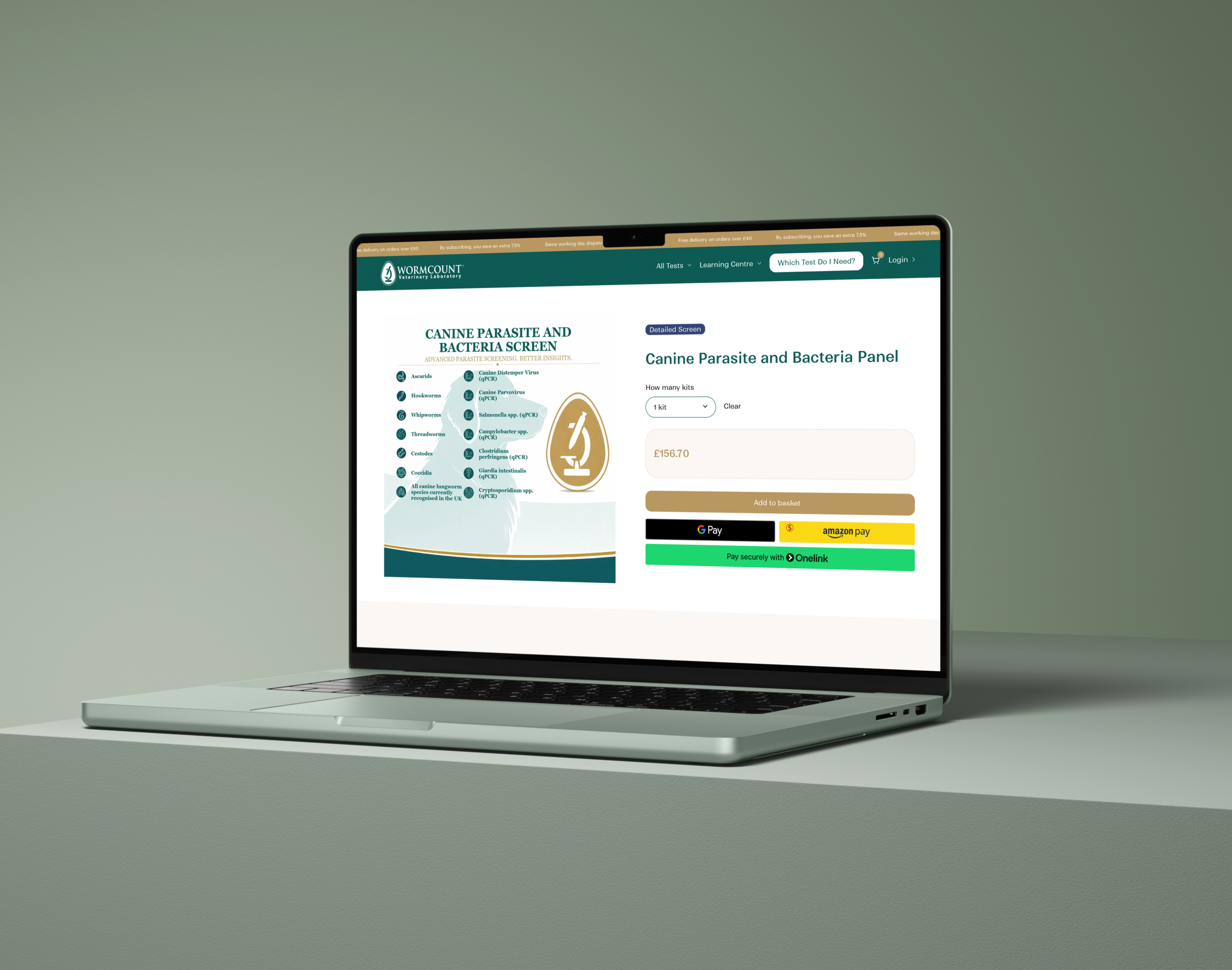
Our Camelid Herd Worm Count Test provides a practical and cost-effective way to monitor gastrointestinal parasite egg shedding in groups of up to five alpacas or llamas. Also known as a pooled camelid faecal egg count (FEC), this test combines faecal samples from selected animals to provide one laboratory result for the group.
Alpacas and llamas can be affected by a range of gastrointestinal parasites, including roundworms and coccidia. Depending on the parasite involved, infections may be associated with weight loss, poor body condition, diarrhoea or reduced growth. Some animals may carry parasites without showing obvious signs, making regular faecal testing a useful part of herd health monitoring.
What Does Our Camelid Herd Worm Count Screen For?
Our trained laboratory team examines the pooled faecal sample using quantitative microscopy to identify gastrointestinal parasite eggs and coccidian oocysts relevant to alpacas and llamas.
The laboratory examination includes:
- Strongyle-type eggs: Including eggs produced by several gastrointestinal roundworms affecting camelids.
- Nematodirus spp.: Intestinal roundworms that may affect alpacas and llamas.
- Strongyloides spp.: Including Strongyloides papillosus, where identifiable.
- Trichuris spp.: Whipworms that may be identified during microscopic examination.
- Coccidia (Eimeria spp.): Including recognisable oocysts of Eimeria macusaniensis, an important gastrointestinal parasite of camelids.
- Other relevant parasites: Additional recognisable gastrointestinal parasite eggs or oocysts where present.
Where appropriate, findings are quantified as eggs per gram (EPG) or oocysts per gram (OPG) of faeces. These values provide an indication of parasite shedding within the pooled sample rather than the parasite burden of each individual animal.
How Does Pooled Camelid Herd Testing Work?
Fresh faecal material is collected from up to five alpacas or llamas of the same species and combined into one pooled sample for laboratory examination.
For the most useful results, we recommend selecting animals that are of a similar age, health status and management group, ideally those that live or graze together and have comparable parasite exposure.
Our laboratory thoroughly mixes the submitted material and examines representative portions using microscopy. Findings are reported as one pooled herd result, providing an overview of parasite egg or oocyst shedding within the sampled group.
Please note: Pooled testing does not provide individual parasite counts for each alpaca or llama. Animals with higher parasite egg shedding may not always be identified separately within a pooled sample.
Why Choose Regular Camelid Herd Worm Count Testing?
Regular alpaca and llama herd worm count testing can help monitor gastrointestinal parasite egg shedding over time and support more informed parasite-control decisions.
Pooled testing may be particularly useful for:
- Routine gastrointestinal parasite monitoring in healthy groups of alpacas or llamas.
- Assessing parasite egg shedding before considering worming treatment.
- Monitoring changes in parasite shedding throughout the grazing season.
- Supporting targeted parasite control and reducing unnecessary anthelmintic use.
- Providing a cost-effective alternative to testing every animal individually.
A low or negative pooled worm count does not completely exclude infection, as egg shedding can vary between animals and some parasites may be present below the detection limit. Results should be considered alongside herd health, grazing conditions and previous treatments.
When Is Individual Camelid Testing Recommended?
Although pooled testing is useful for routine herd monitoring, individual worm counts are recommended for animals showing signs of illness, unexplained weight loss, diarrhoea, reduced body condition or poor performance.
Individual testing allows the laboratory findings to be linked directly to a particular animal, helping support veterinary assessment and appropriate parasite management decisions.
Professional Camelid Parasite Testing at www.wormcount.com
All samples are examined in our purpose built veterinary laboratory by trained laboratory analysts. Findings are reviewed before a clear laboratory report is issued, with relevant interpretative comments provided where appropriate.
Every test includes clear laboratory results and free after test advice. If you have any questions about your herd’s results, our laboratory team will be happy to help.
Testing an individual alpaca or llama? Our Camelid Worm Count Test provides individual faecal parasite screening where results are required for a specific animal.