Farm Animal FEC Tests for Targeted Parasite Control

Fast, accurate faecal egg count testing for sheep, cattle and livestock, from a trusted UK laboratory.
Wormcount Farm Animals Feature

Test First. Treat When the Evidence Says So.

Farm Animal Worm Count Testing for Farms & Smallholders

Smarter parasite control starts with knowing what’s there.

Routine blanket worming without assessing parasite risk is no longer recommended as a universal approach to livestock parasite management. Resistance to commonly used wormers is a growing concern across UK farming, and industry guidance from SCOPS, COWS and RUMA supports more responsible, evidence-based parasite control.

At Wormcount Vet Lab, we provide professional laboratory based faecal egg count (FEC) testing for sheep, cattle, goats, pigs and other farm animals. Whether you manage a commercial livestock farm, a smallholding or just a few animals, our testing services help you monitor parasite levels, assess treatment effectiveness and make informed worming decisions.

We offer individual animal testing and cost effective pooled herd and flock screening, making routine parasite monitoring practical and affordable for farms and smallholders of all sizes.

Every test includes a detailed PDF laboratory report, with free access to our in house animal health advisory team for guidance on understanding your results and considering appropriate next steps.

Test before you treat, protect your livestock and help preserve the effectiveness of wormers for the future.

Professional Laboratory Testing | AMTRA-Qualified Farm Animal SQP (L-SQP) | Trusted Advice for Farms & Smallholders

At Wormcount Vet Lab, our service goes beyond laboratory testing.
With access to an AMTRA qualified Farm Animal SQP (L-SQP),
you can receive knowledgeable guidance on parasite monitoring,
understanding your results and responsible wormer use.
Suitable for commercial farms, smallholdings and individual livestock owners.

Farm Animal Parasite Tests From Our Laboratory

We offer individual and herd or flock FEC testing for a range of farm animals, as well as dedicated tests for liver fluke, lungworm and Haemonchus contortus. Not sure which test or sampling approach is right for your animals? Our quick guide can help you choose.

Common Parasites in Farm Animals to Know

Intestinal Worms & Nematodes

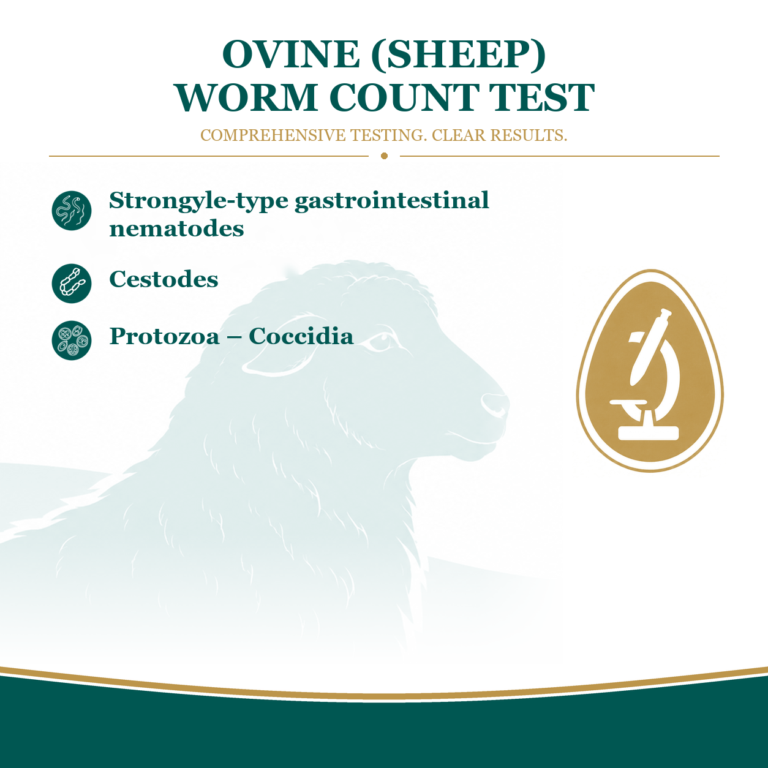
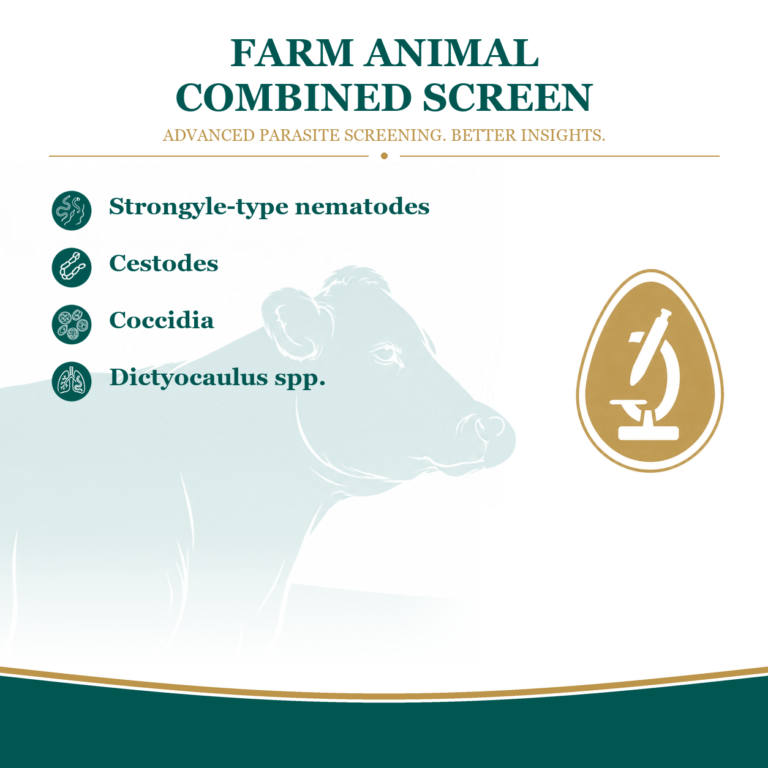
Gastrointestinal nematodes are among the most economically significant parasites affecting sheep and other grazing livestock in the UK. They are picked up from infected pasture and, in sufficient numbers, can cause poor condition, weight loss, scouring and in serious cases, death. A faecal egg count quantifies the worm eggs present in your animal’s faeces and identifies the species involved, allowing treatment to be targeted precisely where it is needed rather than applied as a blanket measure. Results are reported as eggs per gram (epg) and include detection of coccidia as standard . For herd or flock screening, our pool sampling service allows up to ten animals of the same species and similar age to be tested together, providing a reliable group average result at a cost-effective price.

Haemonchus contortus (commonly known as the barber pole worm) is one of the most dangerous internal parasites affecting sheep and goats, and is of growing concern in the UK as changing weather patterns extend its seasonal activity. Unlike many gut worms, H. contortus is a blood-feeding parasite and can cause severe anaemia, bottle jaw, rapid weight loss and sudden death, particularly in young or pregnant animals. It is also notable for its capacity to develop resistance to anthelmintic treatments, making accurate identification critically important. Our dedicated Haemonchus contortus qPCR test provides a highly accurate and species-specific result, enabling appropriate treatment decisions to be made with confidence.

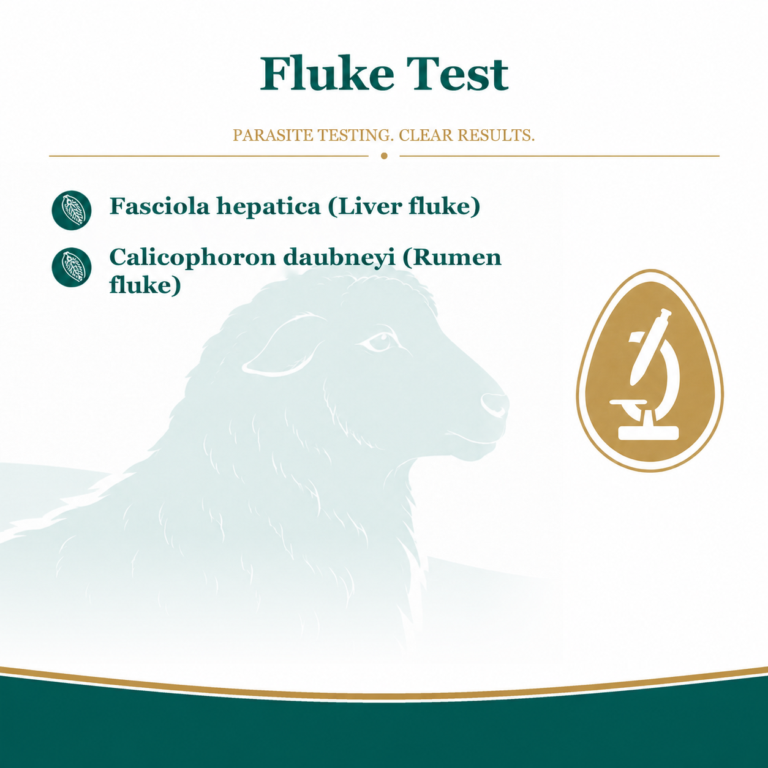
Liver fluke (Fasciola hepatica) is a serious and potentially fatal parasite affecting all grazing farm animals, with sheep and cattle most commonly impacted. Infection occurs when animals consume the mud snail that acts as an intermediate host, typically on wet or marshy pastures during summer and autumn. Symptoms can include anaemia, weight loss, bottle jaw, chronic diarrhoea and elevated liver enzymes, though the severity varies depending on the level of infection and the animal’s age and condition.

Please note that due to the irregular shedding pattern of liver fluke, a negative faecal screen is not always conclusive. Where clinical signs are present, a veterinary blood test is recommended alongside faecal screening to build a complete picture.