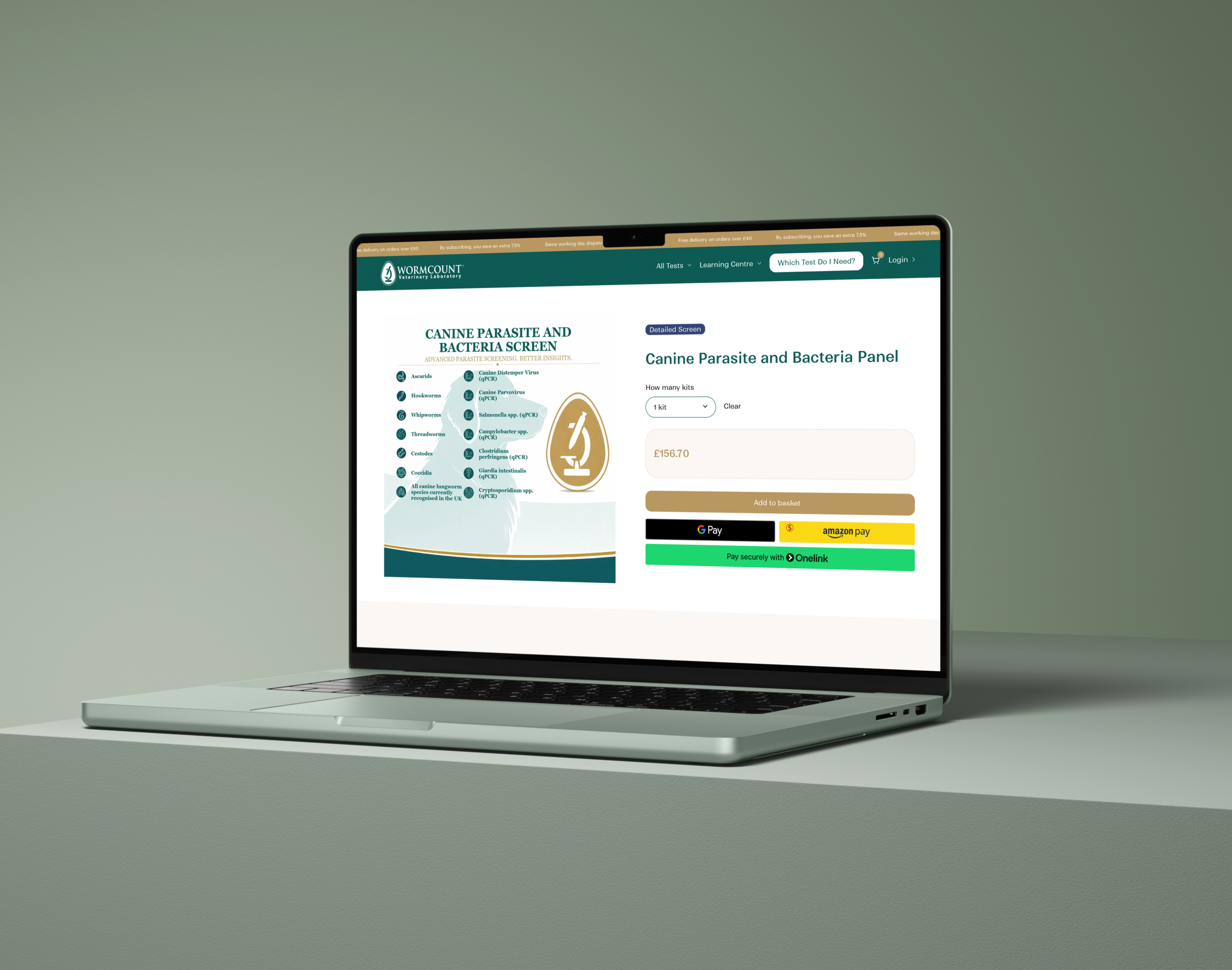
We report the findings from the worm count, extended lungworm screen and seven-target qPCR panel separately.
Worm Count Results
Our laboratory report identifies gastrointestinal parasite eggs and relevant protozoa detected during microscopic examination. The screen includes:
- Roundworm type eggs.
- Hookworm type eggs.
- Whipworm eggs.
- Tapeworm eggs, where present.
- Relevant intestinal protozoa and coccidia.
Where appropriate, we quantify findings as eggs per gram (EPG) or oocysts per gram (OPG) of faeces.
If we do not detect parasites above the detectable limits of the test, we state this clearly in the report.
Extended Lungworm Screen Results
Our extended canine lungworm screen uses specialist laboratory methods to look for respiratory and nasal parasites that may shed larvae or eggs in faeces. The screen includes:
- Angiostrongylus vasorum – French heartworm.
- Crenosoma vulpis – fox lungworm.
- Oslerus osleri – tracheal lungworm.
- Filaroides hirthi – pulmonary lungworm.
- Eucoleus spp. – respiratory and nasal capillarids.
We report whether relevant larvae or eggs were detected and, where appropriate, identify the parasite and assess the findings.
Lungworm larvae and eggs may be shed intermittently. Faecal samples collected over three consecutive days are essential for this screening procedure.
qPCR Panel Results
Our qPCR panel checks for genetic material from seven selected viral, bacterial and protozoal targets. We report each target as Detected or Not Detected:
- Canine parvovirus (CPV).
- Canine distemper virus (CDV).
- Salmonella spp.
- Campylobacter jejuni & Campylobacter coli.
- Clostridium perfringens type A.
- Giardia duodenalis.
- Cryptosporidium spp.
A detected qPCR target does not necessarily mean that organism is causing clinical disease. Results should be interpreted alongside your dog’s history, signs and any veterinary findings.
Understanding Your Results
Our trained laboratory team reviews the findings before sending your results by email. We report each component separately, so you can see which parasites or other targets were detected and review any relevant counts.
Please note: Parasite shedding may be intermittent, so a negative result does not completely exclude infection. This is particularly relevant to tapeworms and lungworm.
As the three components use different laboratory methods, we may issue results separately as each test is completed.
Every package includes clear laboratory results and free after test advice where required.